Monday, June 27, 2016
Tips, tools and apps to make your life easier
There are so many gadgets, hacks, and apps out there - how do you know which ones are worth trying, and which are just going to make your life more difficult? Not to fear! Let's follow the "life cycle" of a project and look at some tips to make things go more smoothly for you.
Find a pattern:

Ravelry.com is the place many of our customers start when they're looking for a new project. They have powerful search functions - click on the "Patterns" tab, then select "pattern browser & advanced search" on the left side of the page. This lets you filter the list of more than 600,000 knitting and crochet patterns. By clicking on choices in the various categories - yarn weight, project type, number of yards, etc. - you can reduce an overwhelming variety of ideas to a handful that are easier to decide among. Many choices are free, and others can be ordered and paid for directly through Ravelry. New to the site? Check out the resources on their wiki pages: http://www.ravelry.com/wiki/pages/GettingStartedGuide
Store your purchases:
"I have seven balls of this yarn that I bought here two years ago, and I think I was going to make a sweater? But I don't know what pattern I was going to use. Do you remember which one I picked?" Don't let this happen to you! Erika's memory is good, but it's not infallible. When you find a pattern and yarn you like - STORE THEM TOGETHER IN THE SAME BAG. It's such a small thing, but it will save you so many potential heartaches later on. Another tip - when you match your yarn and pattern, add the project to your "queue" in Ravelry. That way you can always go back and see what you'd planned to do, even if the physical objects get separated.
Corral your yarn:
You're ready to start, and things are going well ... until your yarn ball rolls off and starts herding the dust bunnies that live under your couch. There are lots of ways to keep runaway yarn from slowing you down.

Keep track of where you are in your pattern:
Stitch markers and Post-It notes, highlighters and pencils - all these things come in handy when you're trying to keep track of where you are in a complicated pattern. But what do you do if you've joined the digital revolution and your pattern is on your iPad or tablet? You use knitCompanion! This app lets you "mark up" pdf patterns the same way you would highlight rows on a piece of paper. Many of our customers swear by it.
And while I'm thinking about it, I have a confession to make. Despite my collection of useful and cute stitch markers, I still end up using paper clips, hair bands, scraps of yarn, pieces of dental floss, twist ties, plastic baggie ties, and even pieces of paper jammed onto my needles. Some days my projects look like they were assembled by a magpie. Don't ask me why ... and don't be ashamed if you do the same thing!
Weave in ends as you go:
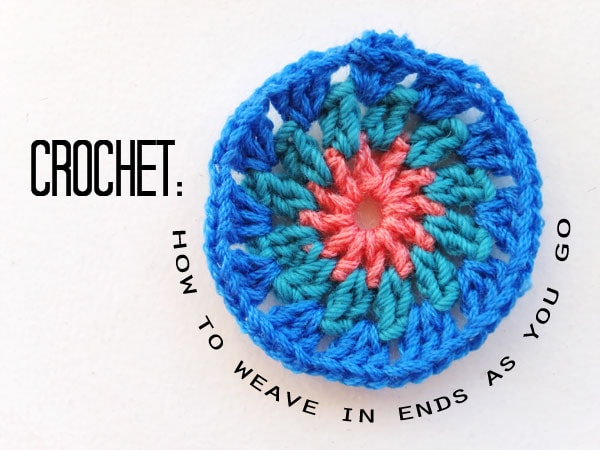
There are few things more disheartening than finishing your beautiful afghan ... and then noticing the hundreds of yarn ends you now have to deal with. Crochet projects are no problem - it's easy to bury the yarn tails as you go, no darning needle required. But knitters should consider taking a break every so often to weave in their ends, especially on projects with lots of color changes. You'll do a neater job if you aren't in such a hurry to finish the project, and you probably won't end up hating the process as much.
Pay attention to yarn care requirements:
The only thing worse than weaving in hundreds of yarn tails? Finishing your project and having it radically change in size or shape the first time you wash it. Ugh! Prevent shrinkage (and bagginess) by paying attention to the care instructions provided by the yarn dyer or manufacturer. These may not be in words - manufacturers have come up with a list of "universal care symbols" which are supposed to tell you all you need to know. Of course, most of us can only remember a few of them, so here's a link to a cheat sheet that shows the meanings of the most common symbols.
So, what's your favorite hack for knitting or crochet? The weirdest thing you've used as a stitch marker? Ever used pencils or chopsticks to replace a lost needle? Share your tips with us in the comments - let's see what you've got!
- Gretchen
Find a pattern:

Ravelry.com is the place many of our customers start when they're looking for a new project. They have powerful search functions - click on the "Patterns" tab, then select "pattern browser & advanced search" on the left side of the page. This lets you filter the list of more than 600,000 knitting and crochet patterns. By clicking on choices in the various categories - yarn weight, project type, number of yards, etc. - you can reduce an overwhelming variety of ideas to a handful that are easier to decide among. Many choices are free, and others can be ordered and paid for directly through Ravelry. New to the site? Check out the resources on their wiki pages: http://www.ravelry.com/wiki/pages/GettingStartedGuide
Store your purchases:
"I have seven balls of this yarn that I bought here two years ago, and I think I was going to make a sweater? But I don't know what pattern I was going to use. Do you remember which one I picked?" Don't let this happen to you! Erika's memory is good, but it's not infallible. When you find a pattern and yarn you like - STORE THEM TOGETHER IN THE SAME BAG. It's such a small thing, but it will save you so many potential heartaches later on. Another tip - when you match your yarn and pattern, add the project to your "queue" in Ravelry. That way you can always go back and see what you'd planned to do, even if the physical objects get separated.
Corral your yarn:
You're ready to start, and things are going well ... until your yarn ball rolls off and starts herding the dust bunnies that live under your couch. There are lots of ways to keep runaway yarn from slowing you down.
- Wind your yarn into center-pull balls whenever possible. Many people prefer to wind their yarn just in time to use it. If you're one of them, consider investing in a yarn winder and swift, the two items you'll need to wind yarn quickly and efficiently.
- Center-pull balls and commercially wound skeins can be easily "unwound" as you work by storing them in something that keeps them contained when you pull on them. This can be anything from a gallon-size plastic bag that's closed except for where the yarn comes out, to a colander, to a shoebox. There are plenty of beautiful yarn bowls on etsy.com if you want something a little more official, and we've found the yarn butler to be a useful tool to hold yarn for our shop projects.
- Project bags are useful, fun, and a little addictive. They're essential for traveling with a project - nobody wants to chase a ball of yarn all over the floor of an airplane - and they make great gifts.

Stitch markers and Post-It notes, highlighters and pencils - all these things come in handy when you're trying to keep track of where you are in a complicated pattern. But what do you do if you've joined the digital revolution and your pattern is on your iPad or tablet? You use knitCompanion! This app lets you "mark up" pdf patterns the same way you would highlight rows on a piece of paper. Many of our customers swear by it.
And while I'm thinking about it, I have a confession to make. Despite my collection of useful and cute stitch markers, I still end up using paper clips, hair bands, scraps of yarn, pieces of dental floss, twist ties, plastic baggie ties, and even pieces of paper jammed onto my needles. Some days my projects look like they were assembled by a magpie. Don't ask me why ... and don't be ashamed if you do the same thing!
Weave in ends as you go:
There are few things more disheartening than finishing your beautiful afghan ... and then noticing the hundreds of yarn ends you now have to deal with. Crochet projects are no problem - it's easy to bury the yarn tails as you go, no darning needle required. But knitters should consider taking a break every so often to weave in their ends, especially on projects with lots of color changes. You'll do a neater job if you aren't in such a hurry to finish the project, and you probably won't end up hating the process as much.
Pay attention to yarn care requirements:
The only thing worse than weaving in hundreds of yarn tails? Finishing your project and having it radically change in size or shape the first time you wash it. Ugh! Prevent shrinkage (and bagginess) by paying attention to the care instructions provided by the yarn dyer or manufacturer. These may not be in words - manufacturers have come up with a list of "universal care symbols" which are supposed to tell you all you need to know. Of course, most of us can only remember a few of them, so here's a link to a cheat sheet that shows the meanings of the most common symbols.
So, what's your favorite hack for knitting or crochet? The weirdest thing you've used as a stitch marker? Ever used pencils or chopsticks to replace a lost needle? Share your tips with us in the comments - let's see what you've got!
- Gretchen
Labels: 2016, apps, crochet, hacks, knitting, techniques, tips